
Skip to content

Recent Posts

  • Ancient Egypt Slots: From Scarabs to Free Spins
  • How Free Slots Support Game Testing Before Real-Money Release
  • Wild Mechanics: How Sticky Wilds Change Bonus-Round Mathematics
  • Most Popular Slot Themes and Why They Keep Returning
  • Pragmatic Play Slots Guide: From Paylines to Cluster Pays

Most Used Categories

  • Slot Themes (4)
  • Slot Features (4)
  • Mobile Slots (4)
  • Megaways Slots (3)
  • Jackpot Slots (3)
  • Free Slots (3)
  • Slot Guides (3)
  • High-RTP Slots (2)
  • Slot Providers (2)
  • Slot Reviews (2)
Skip to content
Isa Automation Week

Isa Automation Week

Subscribe
  • Free Slots
  • Slot Themes
  • Jackpot Slots
  • Slot Features
  • Mobile Slots

Home › Slot Themes

Category: Slot Themes

Ancient Egypt Slots: From Scarabs to Free Spins

Ancient Egypt Slots: From Scarabs to Free Spins

Lucía Fernández08/31/202608/05/2026

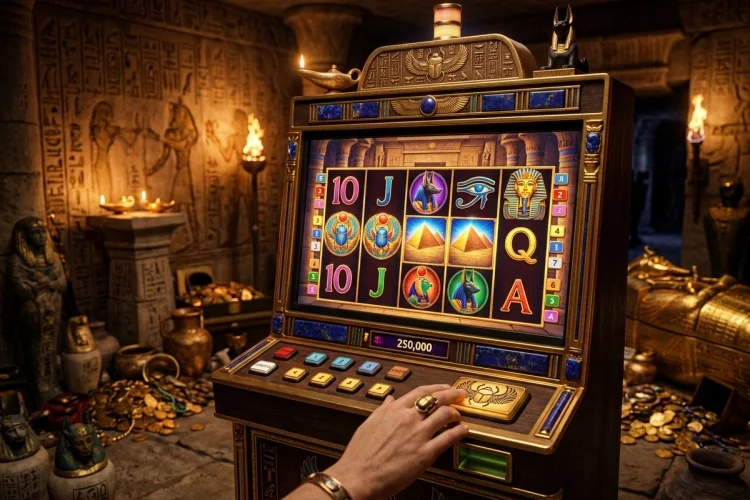
Ancient Egyptian imagery gives slot developers a ready-made world of temples, gods, treasure chambers, and supernatural symbols. It also provides a natural reason for doors to open, reels to expand, and hidden prizes to appear.

That is why Ancient Egypt Slots often share several recognizable features. Scarabs may activate free spins, pharaohs can collect prizes, magical books may expand symbols, and tomb doors can reveal bonus games.

However, similar artwork does not mean identical gameplay. One title might use ten fixed paylines, while another offers thousands of changing win ways.

Understanding the major feature types makes it easier to compare them without relying only on graphics.

Wild Symbols and Substitutions

A wild usually substitutes for selected regular symbols to help complete winning combinations. Egyptian games commonly use gods, queens, explorers, ankhs, or magical books for this purpose.

Eye of Atum uses its central god as a wild. When Atum appears on reels two, three, or four, he can expand to cover the full reel.

A wild may exclude scatters or bonus symbols, so the paytable should explain exactly which icons it can replace.

Scarab Scatter Features

The scarab is frequently used as a scatter because its historical connection with regeneration fits the idea of unlocking another stage. In ancient Egyptian culture, scarab amulets could symbolize renewal and regeneration.

Rise of Giza PowerNudge uses scarabs as scatter overlays. Collecting three activates free games.

Eye of Cleopatra also requires three scarab scatters to enter its bonus, after which players choose between free-spin options with different starting quantities and wild patterns.

Expanding Symbols

An expanding symbol grows to cover several positions or an entire reel. This mechanic fits Egyptian themes because magical books, gods, and sacred objects can appear to release hidden power.

Book of Dead randomly chooses a normal symbol before free spins begin. Whenever enough copies land during the bonus, that symbol can expand across its reels and create additional payline combinations.

Eye of Atum uses expanding wilds instead. Every expanded wild during free spins contributes to symbol upgrades, giving the feature a sense of progression.

Free Spins and Retriggers

Free spins are one of the most common bonuses in Egyptian-themed games. They usually activate through three or more scatters, although the number of awarded rounds varies.

Legacy of Dead uses tomb scatters to unlock free spins, while Book of Dead awards ten rounds after three book scatters.

Retriggers may add more spins when additional scatters or special wilds appear. Some games also increase multipliers or upgrade symbols as the feature continues.

Cascades and Avalanche Reels

Cascading games remove winning symbols and replace them with new ones. This allows several combinations to form from one paid round.

Mummy Megaways combines its Egyptian tomb setting with NetEnt’s Avalanche system. Winning icons disappear, new symbols drop into their positions, and the sequence can continue when another win forms.

This game also uses changing reel heights and up to 117,649 winning ways, showing how a traditional theme can support a highly modern layout.

Coin Collection and Instant Prizes

Some Egyptian slots place cash values on coins, artifacts, or treasure symbols. Another character-often a pharaoh, explorer, or collector-gathers those amounts.

Coins of Egypt uses Pharaoh Coins that can award instant coin prizes in the base game. Its other features include wild substitutions and scatter symbols on a five-reel, three-row layout.

Collection mechanics make the treasure-hunting theme feel more active because symbols appear to be gathered rather than simply matched.

Jackpots and Bonus Chambers

Egyptian tombs are natural settings for jackpots because they suggest sealed rooms containing rare treasure. A feature might require bonus symbols to fill rows, open doors, or reveal one of several prize levels.

Mercy of the Gods includes fixed jackpot awards connected with its Gift of Wealth feature. Its Mega prize is awarded when three rows are filled completely with bonus symbols.

Jackpot rules differ significantly, so reviewers should distinguish fixed prizes, local progressives, and networked jackpots rather than treating them as one category.

The defining features of Ancient Egypt Slots often include wild substitutions, scarab scatters, expanding symbols, free spins, cascades, coin collection, and jackpot chambers.

These mechanics fit naturally with stories about magical books, powerful gods, sealed tombs, and hidden treasure.

Still, two games with nearly identical artwork can operate very differently. Check the reel layout, winning system, RTP, volatility, feature trigger, and maximum payout separately.

Open a free demo and test the help menu before focusing on the reels. The best Egyptian-themed game is usually the one whose rules remain clear while its theme and mechanics support each other naturally.
Most Popular Slot Themes and Why They Keep Returning

Most Popular Slot Themes and Why They Keep Returning

Lucía Fernández08/26/202608/05/2026

Why do online casinos contain so many gods, fishermen, fruit baskets, explorers, and candy-filled worlds? The answer is not simply that developers have run out of ideas.

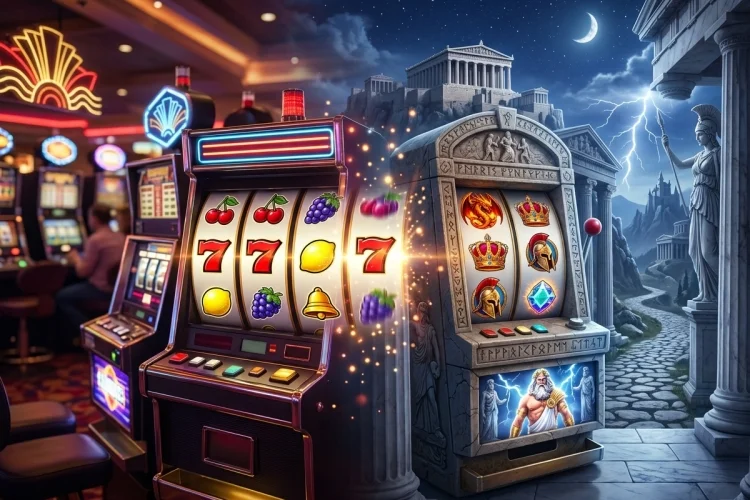
The Most Popular Slot Themes return because they communicate quickly. A player can recognize an Egyptian adventure, Christmas game, or fishing bonus before reading every rule.

Familiar themes also give developers a structure for symbols, sound effects, characters, and special features. The strongest games connect those elements instead of treating the theme as decoration.

Understanding why certain categories endure can help you evaluate whether a new slot offers a meaningful interpretation or merely changes the artwork.

Familiar Images Reduce the Learning Curve

Traditional fruit symbols require little explanation. Cherries, bells, bars, and sevens immediately suggest a classic slot format, even when the game introduces modern features.

Fruit Shop demonstrates this approach by combining a familiar fruit-machine appearance with wild substitutions and a multiplier. Fruit Shop Megaways keeps the same identity while adding variable reel sizes and free spins.

Familiar imagery gives developers freedom to change the mechanics without making the game feel completely unfamiliar.

Themes Can Explain the Mechanics

A good theme makes a feature easier to understand. A fisherman collecting fish symbols feels logical, just as a god throwing lightning can naturally activate multipliers or remove symbols.

Big Bass Bonanza uses fisherman wilds to collect the values shown on fish money symbols during free spins. Later games in the series change locations and modifiers while keeping that central collection idea recognizable.

When theme and mechanics support each other, players need less abstract explanation to understand what is happening.

Characters Turn Individual Games into Series

A memorable protagonist can connect several games that use different layouts and features. The character becomes a recognizable guide while the developer changes the adventure.

Rich Wilde began his best-known journey in Book of Dead and later appeared in several related titles. Play’n GO describes the original as a modern classic and has continued expanding the wider Dead-series mythology around the Wilde family.

Series can feel fresh when each release introduces a genuine mechanical change. They become repetitive when only the background and title are updated.

Mythology Provides Built-In Drama

Ancient gods and legendary monsters already carry ideas of power, conflict, and transformation. These concepts translate easily into multipliers, expanding symbols, bonus battles, and dramatic free-spin rounds.

Pragmatic Play has used Greek mythology in Gates of Olympus, Greek Gods, and later Gates of Hades. The company itself describes Greek mythology as a popular theme within its catalogue.

The setting also gives artists a wide visual range, from bright heavenly palaces to dark underworld environments.

Candy Themes Make Complex Grids Easier to Read

Candy games often use strongly contrasting shapes and colors. This is useful in cluster or pays-anywhere games where many symbols can form combinations across a large grid.

Sweet Bonanza 1000 requires at least eight matching fruit or candy symbols to create a win. Sugar Rush 1000 instead uses groups of five or more adjacent sweets on a 7×7 grid.

Although both are sugary games, their win systems are different. This illustrates why a theme should never be used as a substitute for reading the rules.

Branded Games Begin with Existing Recognition

Film, television, music, and game-show slots start with an audience that already knows the characters or format. That recognition can make the game easier to market.

Jumanji uses dice rolls, a board-game feature, and multiple modifiers to connect its mechanics with the film’s central concept. Big Time Gaming has also adapted brands such as Monopoly, Wheel of Fortune, and Who Wants to Be a Millionaire into slot formats.

The licence alone does not make a good game. The mechanics still need to feel connected to the source material.

Seasonal Versions Refresh Known Products

Seasonal games let providers reuse familiar characters or mechanics in a limited-time setting. Snow, gifts, pumpkins, or summer scenery can give an established game a different mood.

Fruit Shop Christmas preserves the original multiplier-based fruit gameplay while adding a winter presentation. Big Bass Christmas Bash moves its fishing theme to a snowy lake and adds festive symbols.

These versions appeal most when the redesign adds atmosphere without making the interface harder to read.

Theme Does Not Control the Mathematics

A friendly candy world is not automatically lower risk than a dark mythological game. Artwork does not determine RTP, volatility, maximum win, or the probability of entering a bonus.

Those details belong to the mathematical model of the individual title. Similar-looking games can have very different rules and result distributions.

Always check the exact game information instead of assuming that a playful theme means gentler gameplay.

The Most Popular Slot Themes keep returning because they provide familiarity, clear visual language, and natural ways to explain features.

Fruit symbols support simple rules, mythology creates dramatic multipliers, fishing encourages collection mechanics, and adventure characters connect games into long-running series.

However, repetition is not automatically quality. A strong themed game connects its artwork, audio, symbols, and bonus systems into one understandable experience. Compare several titles within the same category and read their paytables carefully.

Choose the interpretation that offers clear mechanics and thoughtful design rather than the game using the most recognizable character or fashionable visual trend.

Slot Features and Narrative Design: Turning Mechanics Into Story

Slot Features and Narrative Design: Turning Mechanics Into Story

Lucía Fernández08/14/202608/14/2026

A traditional slot can communicate almost everything through symbols and numbers. Three matching icons create a win, scatters start a bonus, and wilds substitute for other symbols. Efficient? Yes. Memorable? Not always.

Narrative-driven games take a different approach.

By combining Slot Features with Narrative Design, developers can make the same underlying mechanic feel like part of an unfolding event. A cascade becomes destruction inside a fantasy world. A sticky wild represents an ally joining the battle. A multiplier meter becomes a hero charging an attack.

The underlying probabilities are still mathematical, but the way players read those probabilities and features changes.

Research into storytelling in digital games has found that narrative elements can improve perceived engagement and interest, although overly elaborate storytelling can also compete with task-focused attention.

That trade-off is especially relevant to slots, where mechanics need to remain understandable within seconds.

Narrative Can Turn Abstract Rules Into Mental Models

Slot mechanics are often described using technical language.

Cascades.

Persistent wilds.

Dynamic reels.

Progressive multipliers.

To someone already familiar with modern games, these terms are straightforward. To a first-time user, they can sound like a manual.

Narrative can translate them into more intuitive mental models.

Imagine a warrior character whose sword becomes stronger after every cascade.

The mathematical rule might be:

Multiplier increases by one level after each qualifying reaction.

The narrative version becomes:

Each successful attack strengthens the warrior.

Both describe the same feature.

The second simply provides a memorable metaphor.

This can reduce the cognitive effort required to understand what is changing during the feature.

It is similar to good icon design: instead of memorising an abstract rule, the user recognises a familiar idea.

Story Pacing Can Mirror Feature Pacing

Narratives usually have rhythms.

Introduction.

Build-up.

Conflict.

Climax.

Resolution.

Bonus features often follow a surprisingly similar pattern.

A base game establishes the normal state. Scatters create anticipation. A trigger moves the player into a different mode. Multipliers or persistent symbols build throughout the feature. The round then ends with a final total.

Narrative Design can align those stages.

Play’n GO’s 13th Trial Hercules Abyssways uses an evolving Free Spins grid where mythology and mechanical changes occur together. Hera removes symbols, Zeus influences wilds, and Pegasus interacts with Hercules symbols as the board changes.

This means feature escalation can also feel like narrative escalation.

The board is not simply becoming mechanically different.

The story is becoming more intense at the same time.

That alignment creates pacing without requiring cutscenes or lengthy dialogue.

Progression Changes How Features Are Perceived

A feature that happens instantly feels different from one that develops over time.

Suppose a multiplier jumps directly from 1x to 10x.

Now compare that with a feature where it grows from 1x to 2x, 3x, 5x, and eventually 10x while visual elements evolve around it.

The final mathematical value might be similar, but the second system communicates progression.

Play’n GO has explicitly discussed designing mechanics that build a sense of momentum and progression. Its Blitzways mechanic, for example, combines cascading wins, dynamic reels, and Sticky Wild multipliers that can increase through subsequent wins.

Narrative can reinforce this progression.

A temple opens room by room.

A character gains equipment.

A spaceship moves between planets.

An enemy becomes increasingly damaged.

These story states give mechanical progression an understandable direction.

Instead of “the number went up,” the interation becomes “the journey moved forward.”

Character Roles Can Organise Complex Features

Games sometimes have too many effects competing for attention.

One symbol expands.

Another collects values.

A third creates wilds.

A fourth activates a respin.

This can quickly become messy.

Characters can act as organisers.

Play’n GO’s Trinity Impact uses a group of heroes and connects its magical setting with transforming wilds, respins, and an Ultimate Attack feature.

The broader design lesson is useful beyond that specific game.

If every character consistently represents a particular mechanical behaviour, the cast becomes part of the interface vocabulary.

A fire character might always multiply values.

A healer might restore symbols.

A thief might collect prizes.

Those relationships do not change the probability model, but they change how quickly someone can understand what is happening.

Consistency is what makes the system work.

Randomly changing character functions from one feature to another would destroy the mental shortcut.

The Environment Can Become a Progress Indicator

Traditional interfaces use progress bars.

Narrative-driven games can let the environment perform some of that job.

Imagine a journey through five locations.

Each bonus stage moves into a new area, and every area introduces another modifier.

The player understands progression because the scenery changes.

Play’n GO’s Rosy Orbit Treasure Turn connects spatial movement directly to its mechanics. The grid rotates after wins, symbols shift, and larger symbols interact with the board while the whole experience is framed around a tiny cosmic world.

This is a strong example of mechanics and setting sharing the same visual language.

The feature literally moves through space.

As a result, animation is doing several jobs simultaneously:

showing the outcome,

explaining the mechanic,

and reinforcing the story.

That is much more efficient than simply adding decorative effects around an unrelated game system.

Story Can Make Feature Transitions Easier to Notice

One of the biggest UX problems in feature-heavy slots is state change.

When exactly did the normal game end?

Did Free Spins begin?

Is that multiplier still active?

Will the wild remain for the next cascade?

Narrative transitions can help answer these questions.

The screen might move into another location when Free Spins begin.

Music can change.

A character can enter the scene.

Lighting can shift.

These cues tell the player that the rules have changed.

Good audiovisual communication is especially helpful when the rules of the feature differ substantially from the base game.

However, storytelling should remain supportive rather than overwhelming.

The Frontiers storytelling study found greater engagement and interest with narrative content but also slightly reduced task-focused performance in its particular rhythm-game experiment.

That research was not about slots, but the broader lesson is relevant: more story is not automatically better.

If the spectacle hides the important mechanical information, Narrative Design has failed its UX job.

Narrative Should Not Imply Fake Control

There is another important boundary.

Stories naturally create ideas of agency.

A hero chooses a path.

A character attacks an enemy.

A player opens a treasure chest.

In a random slot, however, narrative presentation should not create a misleading impression that fictional choices alter probability when they do not.

If three treasure chests all reveal predetermined random outcomes with identical mathematical probabilities, the interface should not imply that one can be strategically identified as the “best” chest.

Similarly, a character getting visibly closer to a bonus should only communicate real progression when the game actually tracks such progress.

Great Britain’s Gambling Commission requires game descriptions to explain how the game works, how winners are determined, and relevant information about RTP, house edge, or winning probabilities.

Clear rules therefore remain the foundation.

Story can make mechanics friendlier.

It should never make random events look skill-based when they are not.

Feature Design Can Also Carry the Story

Narrative is strongest when it does not need to stop gameplay to explain itself.

Instead of adding a long introduction, developers can let the mechanics tell the story.

Play’n GO described 13th Trial Hercules Abyssways as a design where mythology and mechanics merge, with characters affecting the grid through the same actions that drive the feature.

That is an important distinction.

A slot with an Egyptian background and completely unrelated cyberpunk bonus mechanics has a theme.

A slot where exploration, characters, symbols, bonuses, and progression all behave according to the same fictional idea has deeper narrative integration.

The second approach creates coherence.

Players do not need to seperate the story from the game system because the system itself communicates the story.

That can make even relatively simple mechanics feel distinctive without making the mathematical model unnecessarily complicated.

Good Narrative Design Makes Mechanics Easier, Not Harder

The best test is surprisingly simple.

Remove the narrative presentation and look at the mechanic.

Can it still be explained clearly?

Now restore the narrative.

Does the story make the mechanic easier to recognise, remember, or anticipate?

If yes, the integration is probably working.

If the player now needs three extra paragraphs of lore just to understand what a wild does, the design may have gone too far.

Slots operate in a fast visual enviroment, so narrative communication needs to be compact.

Characters, colour changes, progression states, environmental movement, and sound cues often work better than lengthy exposition.

The goal is not to turn every slot into an interactive novel.

It is to give each mechanical event context.

That context is what transforms a collection of features into a coherent game world.

Slot Features and Narrative Design work best when story helps players read the mechanics rather than distracting from them. Characters can explain abilities, environments can show progression, and bonus transitions can become meaningful story events.

Developers should keep probability information clear while using narrative to organise complex features. When mechanics tell the story themselves, the entire game feels more connected.

Why Slot Themes Influence Game Mechanics More Than Players Realise

Why Slot Themes Influence Game Mechanics More Than Players Realise

Lucía Fernández08/03/202608/14/2026

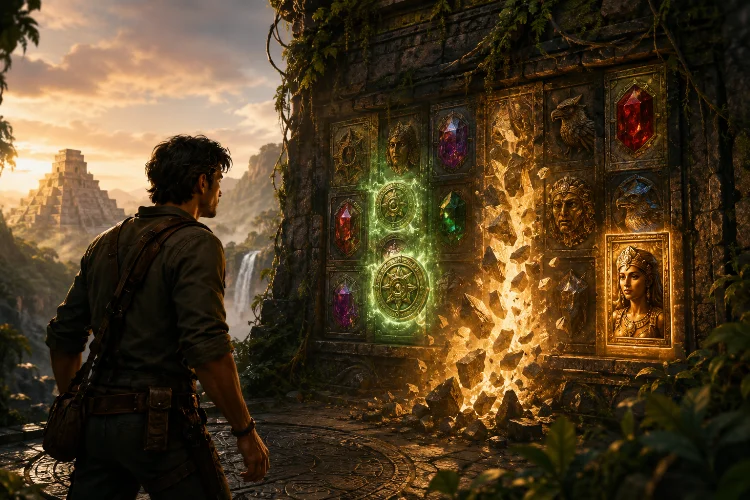
Take two slots with similar mathematical foundations and give them completely different themes. One becomes a disco game where wins trigger dancing wilds and expanding stages. The other becomes an adventure title where the same broad ideas are represented as discoveries, collapsing environments, or treasure collections.

They can feel like completely different products.

That is one reason Slot Themes Influence Game Mechanics far beyond visual presentation. Theme affects how features are introduced, how progression is organised, which events feel important, and how players interpret changes in the game state.

Funk Master offers a useful example. Evolution describes it as a disco-themed slot using Cluster Pay and Avalanche mechanics, with a play area that can expand during Free Spins. The expanding structure does not just create more mathematical possibilities; it also fits the idea of a dance-floor experience becoming increasingly energetic.

Theme and mechanics can reinforce one another without changing the fundamental rules of probability.

Theme Often Determines the Rhythm of a Feature

Game pacing is not only about spin speed.

It also concerns how frequently the experience appears to change.

A classic fruit theme might suit short, immediate mechanics: simple wilds, respins, and straightforward free spins. An adventure theme has more room for a progression sequence where several events lead toward a larger feature.

This difference can exist even if both games use similar theoretical RTP.

Think about a treasure-hunting slot.

Finding one map fragment can lead to another, followed by a key, then a vault feature. The theme makes gradual progression feel natural.

In another setting, the same mathematical system might be represented as filling three abstract meters.

The first version feels like a journey.

The second feels like accounting.

Theme therefore affects pacing perception even when the numerical mechanics underneath are broadly similar.

The Setting Can Decide Which Mechanics Feel Natural

Not every feature fits every fictional world equally well.

A cascading mechanic works naturally with themes involving destruction, falling objects, mining, or collapsing environments.

Collection mechanics work well with treasure, fishing, farming, or exploration.

Expanding reels can make sense in themes involving growth, construction, crowds, or escalating energy.

For example, Gonzo’s Quest Megaways combines its exploration theme with Avalanche mechanics and an Earthquake feature capable of removing lower-paying symbols.

The important point is not that adventure themes mathematically require cascades.

They do not.

Rather, the setting creates a convincing reason for the cascade to happen.

That allows the designer to introduce a relatively sophisticated probability mechanism without making it feel disconnected from the rest of the game.

Reward Hierarchy Can Be Built Around Themed Objects

Most slot games contain a hierarchy of value.

There are low-paying symbols, premium symbols, wilds, scatters, and sometimes feature-specific collectibles.

Theme determines how those categories are communicated.

In a wealth-themed game, coins or diamonds might represent high value. In a mythology game, gods may sit above card symbols. In a game-show slot, familiar programme elements can signal special mechanics.

Who Wants to Be a Millionaire Megaways uses question-mark Rainbow Wilds on an additional reel, linking the familiar question-based brand identity with a functional substitution mechanic.

This kind of design helps players build a mental hierarchy.

A question mark is not simply another symbol—it communicates that something unusual may happen.

Good themed design makes the reward structure readable before players memorise every line of the paytable.

Themes Can Turn Mathematical States Into Physical Places

One of the most interesting developments in modern slots is the use of location-based progression.

Instead of saying that the game has moved from State A to State B, designers can move a character from one place to another.

MONOPOLY Megaways uses this idea through Reel Adventure, combining reactions and free spins with a feature inspired by movement through the MONOPOLY world.

The mathematical model still contains state transitions.

But the player sees locations.

This matters because modern bonus structures can become complicated. A game may have a normal state, enhanced state, free-spin state, multiplier state, and several upgrade levels.

Visualising these as physical progress can make the system easier to understand.

The theme becomes an interface for an otherwise abstract mathematical state machine.

Feature Interaction Becomes Easier to Explain Through Theme

Modern slots often combine mechanics rather than activating them seperately.

A wild may trigger a cascade. The cascade can increase a multiplier. The multiplier remains active during free spins, while another feature expands the reel grid.

Explaining that purely with numbers can become messy.

Theme allows these dependencies to appear as cause and effect.

Space Wars 2 Powerpoints, for example, allows matched symbols to turn into a Wild, disappear, and make room for new symbols, while the Wild interacts with nearby winning clusters and the Powerpoints mechanic.

A transformation-heavy science-fiction theme makes that chain of events feel coherent.

The player sees symbols combining and generating energy-like progression rather than a series of unrelated mathematical rules.

That is a subtle but important role of theme.

It can communicate dependency.

Theme Can Change How Volatility Feels Without Changing It

A game’s volatility is mathematical, but the experience of volatility is partly presentational.

GLI identifies volatility as one of the game-design elements that can be evaluated alongside RTP and the contributions of base games, features, and jackpots.

Now imagine a high-volatility slot.

Long stretches between major outcomes can feel empty if nothing appears to happen visually.

A theme-driven progression meter, collection system, or character animation can create a sense of activity during those periods without necessarily changing the probability of a major payout.

That distinction matters.

Presentation can make a game feel busier without mathematically increasing hit frequency.

Similarly, dramatic sounds and visual effects can make a feature seem more significant than its payout value alone would suggest.

Regulated design therefore needs rules and game descriptions to communicate how the product actually works. The UK Gambling Commission requires relevant game rules and likelihood-of-winning information to be available to customers.

Theme should enhance comprehension rather than blur the difference between entertainment and mathematical value.

Licensed Themes Can Encourage Bespoke Mechanics

Licensed brands create another interesting design challenge.

Simply placing familiar characters over generic reels may make the slot recognisable, but it does not necessarily make the game feel authentic.

A stronger design uses the source material to inspire its mechanics.

Who Wants to Be a Millionaire Megaways turns question imagery into functional wild behaviour. MONOPOLY Megaways incorporates board-game-style progression.

This gives familiar intellectual property a mechanical identity.

The same principle could apply to films, television series, sports brands, or music.

A racing theme can use laps and checkpoints as progression markers. A detective story could unlock clues. A music game may build multipliers by filling a performance meter.

The maths may still use familiar concepts underneath, but the theme influences how those ideas are assembled.

This can make a licensed game feel designed around the brand rather than simply decorated with it.

Theme Cannot Override the Mathematical Model

There is still a clear boundary.

A theme does not give developers permission to change probabilities unpredictably.

UK Gambling Commission guidance states that game rules, payouts, and outcome probabilities cannot simply be altered while the game is available unless the change is provided for in the rules and properly communicated. RNG-based game results must also follow applicable randomness requirements.

Meanwhile, GLI evaluates game mathematics using pay combinations, payout data, simulations, and mathematical analysis to establish theoretical RTP.

So a dramatic “power-up” animation only has mathematical significance if the actual rules say it changes something.

The theme cannot secretly make the game more generous because a hero is winning a battle or make outcomes tighter because the player entered a dangerous area.

Its role is to represent defined states.

This separation keeps presentation and probability balaced.

Strong Themes Can Make Familiar Mechanics Feel New

Many slot mechanics are reused across the industry.

Free spins, wilds, multipliers, cascades, collectors, and expanding grids are not unique ideas on their own.

What changes is how they are combined and explained.

A disco-themed expanding grid feels different from an archaeological Avalanche feature. A board-game progression mechanic feels different from a space-energy collection system.

The underlying mathematical concepts can remain familiar while their thematic meaning changes.

That is why theme remains important even in increasingly technical slot design.

It gives common mechanics context.

And when the narritive and game systems are aligned well, players can understand a complicated feature almost instinctively because every element behaves in a way that fits the fictional world.

The way Slot Themes Influence Game Mechanics goes far beyond backgrounds and symbols. Theme can shape feature pacing, progression, reward hierarchy, interaction, and how mathematical states are communicated. It can even change how volatility feels without changing the underlying odds.

When evaluating game design, look for mechanics that genuinely belong to the theme rather than features that have simply been decorated to match it.

Highlights

  • Wild Mechanics: How Sticky Wilds Change Bonus-Round MathematicsWild Mechanics: How Sticky Wilds Change Bonus-Round Mathematics
  • Slot Paytables: A Practical Guide to Reading Game MathematicsSlot Paytables: A Practical Guide to Reading Game Mathematics
  • Mathematics of Modern Slot Games: Why Feature Stacking MattersMathematics of Modern Slot Games: Why Feature Stacking Matters
  • How Many Scatters Are Needed to Trigger Free Spins in Slots?How Many Scatters Are Needed to Trigger Free Spins in Slots?
Stay connected to the fast moving world of technology with insightful articles on devices, software, artificial intelligence, cybersecurity, mobile innovation, and emerging digital trends. We turn complex developments into accessible information, helping readers understand how new technologies work, why they matter, and how they may influence everyday life and business.
GetMobilePrices
Routerlinksyssmartwifi
Fikretorman
TheNorthpoleBar
SingleSmokers
Stromectol1h
Eclector
KetoPremiere
Atozmp3
Bside-rock
Ukinvestmentadvice
Buzfeed.org
MakerFieldSpring
WhiteSwillWinParty
VisitLizardCornwall
Big-HeadBasketball
VideoReview
Woodstock-Exhibition
Ispaziorepository
Accesschc
Hydrophil
SilentKnightsSoaring
RestorerMinistries
Bodybuilding-Blog
DavidsavillPhotography
BetterSingingVoice
1kdailyprofit-official
JainSonUmbrella
Vr7uallms
Dz-Recrute
CuisineMetisse
Alphabetnyc
ProjectThinice
Lympleylodge
AmbProductions
Johnpowellavs
DakarRally
Dumbletoncc
BaconFromAcorns
LogMe
Ffmovies
Daily-News
AirTechNow
Avideo
OpenLoad
OwnerFinancing
Variable-Annuity
GoodBrand
InvestFutureNow
OceanBreeze
JustSummer
OneTech
Naturelv
DepositRetiree
CuteEye
NextVision
LordMovies
Excited
Exporelab
Supav

Recent Posts

  • Ancient Egypt Slots: From Scarabs to Free SpinsAncient Egypt Slots: From Scarabs to Free Spins
  • How Free Slots Support Game Testing Before Real-Money ReleaseHow Free Slots Support Game Testing Before Real-Money Release
  • Wild Mechanics: How Sticky Wilds Change Bonus-Round MathematicsWild Mechanics: How Sticky Wilds Change Bonus-Round Mathematics
  • Most Popular Slot Themes and Why They Keep ReturningMost Popular Slot Themes and Why They Keep Returning
  • About Us
  • Contact
  • Disclaimer
  • Privacy Policy
  • Terms & Conditions
  • Index
© 2026 IsaAutomationWeek | Theme: BlockWP by Candid Themes.